
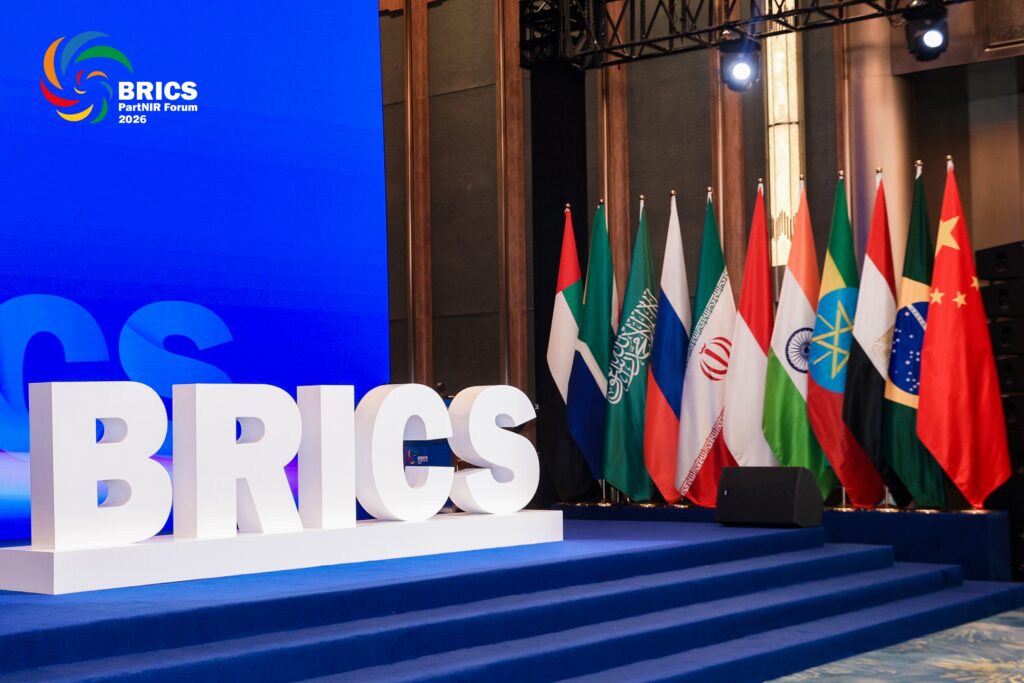
Margareth Menezes, the Brazilian Minister of Culture, recently noted, “BRICS is not just an economic group, but a dialogue platform that values cultural diversity and sees it as a driving force for fairer and more balanced development.”
Accordingly, indigenous cultural legacy and knowledge systems—which include languages, oral traditions, rituals, and material culture—are increasingly seen as strategic resources. Despite the challenges posed by globalization and social marginalization, digital preservation offers essential instruments for their protection and revitalization. For these solutions to be efficient, they must be technologically viable and ethically rooted in community-centered governance. Emerging digital initiatives within the expanded BRICS+ configuration operationalize a pluralistic approach to cultural memory preservation, grounded in normative commitments to reciprocal recognition and institutionalized collaborative mechanisms.
Digitization and Digital Repositories as Cultural Governance
The digitalization of cultural heritage functions as a mechanism of institutionalized cultural governance. Nations can create long-lasting records by turning physical artifacts and oral traditions into digital assets that include systems for equal access.
Several BRICS members have established leading models in this field:
- Egypt: The National Cultural Documentation Center integrates Geographic Information Systems (GIS), virtual reality, and multimedia documentation into a national heritage management framework. This demonstrates how digital preservation can be embedded into formal governance structures and technical standards.
- Ethiopia: The Yatreda project applies blockchain technology to document oral history and culture. It uses Non-Fungible Tokens (NFTs) to establish a permanent, verifiable record of cultural expressions and terms, ensuring that Ethiopian culture and folk dances will be permanently shared with definitive provenance.
- Iran: In early 2025, the National Library of Iran intensified its advanced digitization projects, concentrating on the digitizing of more than 300,000 pages of Persian and Arabic manuscripts. This project aims to create a national digital library platform that functions as a comprehensive repository for historical records.
Cultural Security and the Role of Small Language Models (SLMs)
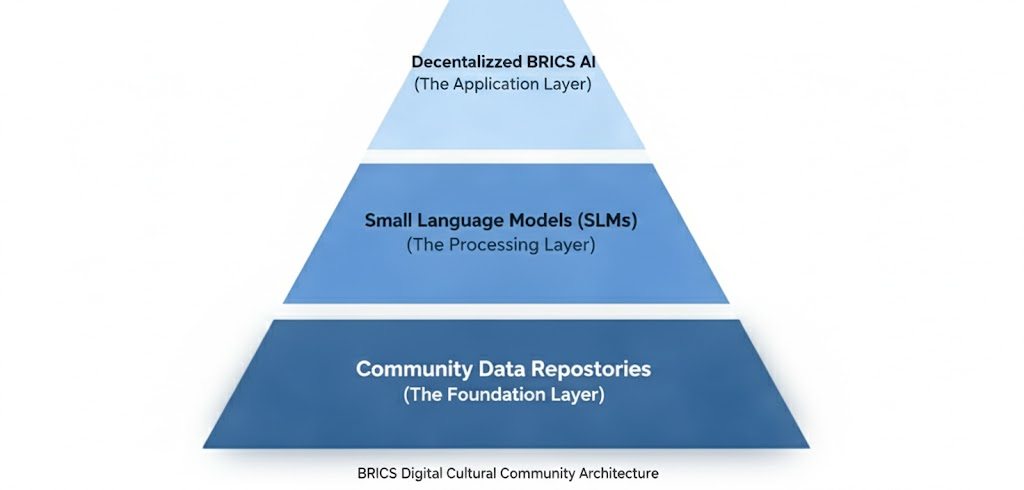
As digitization accelerates, the protection of cultural data from unauthorized commercial ingestion has become a priority in international relations. To address this, Small Language Models (SLMs) have emerged as a resilient alternative to generalized large-scale models.
SLMs are highly efficient models autonomously managed by specified organizations or regions. They provide multiple strategic benefits as follows:
- Data Sovereignty: By training models on localized, high-quality cultural databases, nations can ensure that their unique linguistic and social characteristics are preserved without relying on external infrastructure.
- Risk Mitigation: The deployment of small language models (SLMs) provides a strategic pathway for addressing specialized professional requirements across disciplines such as history, traditional medicine, and linguistics, while concurrently reducing systemic risks of data compromise and the standardization of culturally diverse knowledge systems.
- Community Cooperation: South Africa’s Masakhane initiative represents a community-led model of innovation in natural language processing (NLP) development. The initiative promotes language variety by integrating underdeveloped African languages into AI frameworks, enabling collaboration between African technical specialists and the global technology industry.
Policy Structures and Global Cooperation
The protection of cultural heritages largely depends on coordinated policy frameworks that transcend national borders. The 2025 Brasilia Declaration, approved by BRICS Ministers of Culture, highlights the creation of an ethical digital framework that includes AI and copyright. The statement emphasizes the protection of digital cultural assets and the rights of creators within the broader sustainable development agenda.
These frameworks reinforce the necessity of rights-based policies. Without protection, digital archives can face broad misuse or limited utilization. Therefore, international cooperation is essential for:
- Standard Alignment: Harmonizing technical and legal standards to ensure interoperability across BRICS digital repositories.
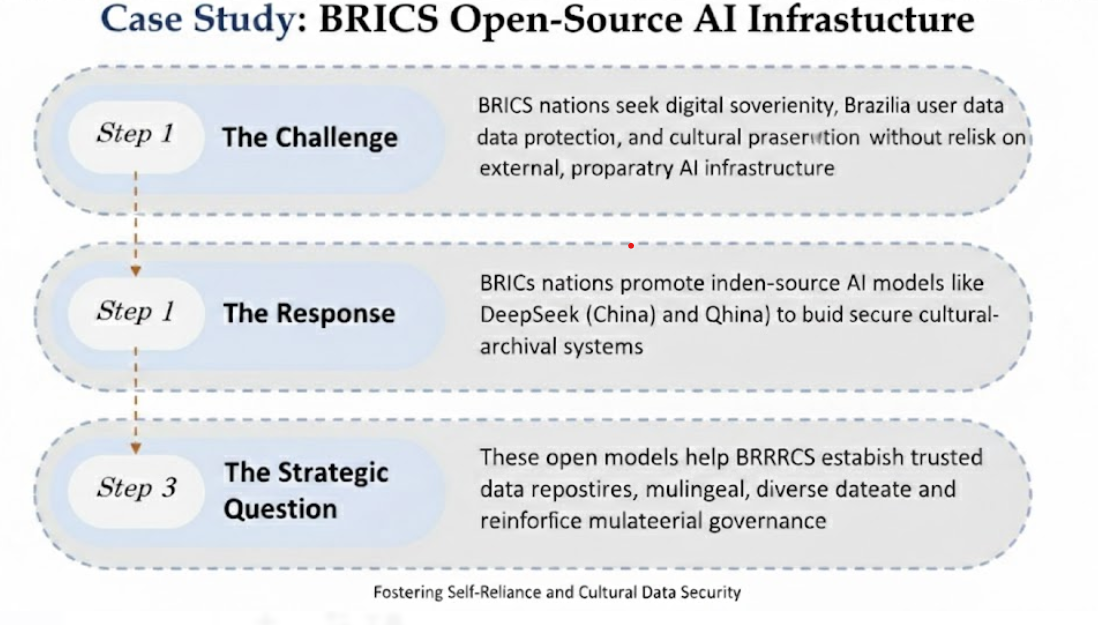
- Infrastructure Development: Promoting independent, open-source infrastructure—such as the DeepSeek and Qwen models—to help BRICS nations establish archival systems that reflect their specific cultural priorities.
- Multilateral Governance: Encouraging the development of inclusive quality datasets that respect the linguistic, racial, and geographical diversity of each member state.
Conclusion
From a global governance perspective, the digital preservation of indigenous knowledge is a strategic field where cultural rights, data security, and developmental politics intersect. The BRICS experience suggests a shift toward a diversified governance framework that values collective ownership and technological autonomy.
Ultimately, digital preservation is more than an archival task; it is a strategic component of global governance. Through inclusive policymaking and community-led initiatives, BRICS-led projects can help rebalance the digital order, positioning cultural heritage preservation as a site for normative innovation and a pathway toward a more equitable trajectory for South-South development.

 By WanyuLiao


No comment yet, add your voice below!