

Chinese President Xi Jinping poses for a group photo with other leaders attending the BRICS-Africa Outreach and BRICS Plus Dialogue in Johannesburg, South Africa, Aug. 24, 2023. (Xinhua/Li Xueren)
BEIJING, Oct. 22 (Xinhua) — On Aug. 24 morning last year, the Sandton Convention Center in Johannesburg erupted with applause upon the announcement of BRICS’ historic expansion. That, Chinese President Xi Jinping said at the press conference, demonstrates “the determination of BRICS countries and developing nations to unite.”
Since the inception of the BRICS mechanism, openness and inclusiveness have remained its members’ abiding commitment. Xi has repeatedly emphasized that BRICS countries gather not in a closed club or an exclusive circle. “A tree cannot make a forest,” he said as early as at his BRICS summit debut in Durban in 2013. A year later at the Fortaleza summit in Brazil, he proposed the “BRICS spirit” of openness, inclusiveness, and win-win cooperation.
With such an open mind, the group developed a tradition of inviting leaders of other countries to its summits. Then at the 2017 gathering in Xiamen, an ancient port city that has evolved into a dynamic hub in China’s opening-up and reform, Xi built on that outreach practice and put forward the “BRICS Plus” program, encouraging more participation of other emerging markets and developing nations.
In fact, this southern Chinese city of Xiamen happened to be where Xi came to work as deputy mayor in 1985 at 32. Now, under Xi’s initiative, an innovation base for the BRICS partnership on the new industrial revolution has taken root there.

A visitor views a model of Xiamen Metro train at the exhibition of BRICS New Industrial Revolution 2024 in Xiamen, southeast China’s Fujian Province, Sept. 10, 2024. (Xinhua/Lin Shanchuan)
Over the years, with profound changes reshaping the world at a degree rarely seen in history, the Chinese president has unwaveringly championed openness and cooperation. “Under the new circumstances, it is all the more important for BRICS countries to pursue development with open doors and boost cooperation with open arms,” Xi said at the 14th BRICS summit in 2022.
A year later, more than 60 countries gathered in Johannesburg for the BRICS summit. The gathering “is not an exercise of asking countries to take sides, nor an exercise of creating bloc confrontation,” Xi said. “Rather, it is an endeavor to expand the architecture of peace and development.”
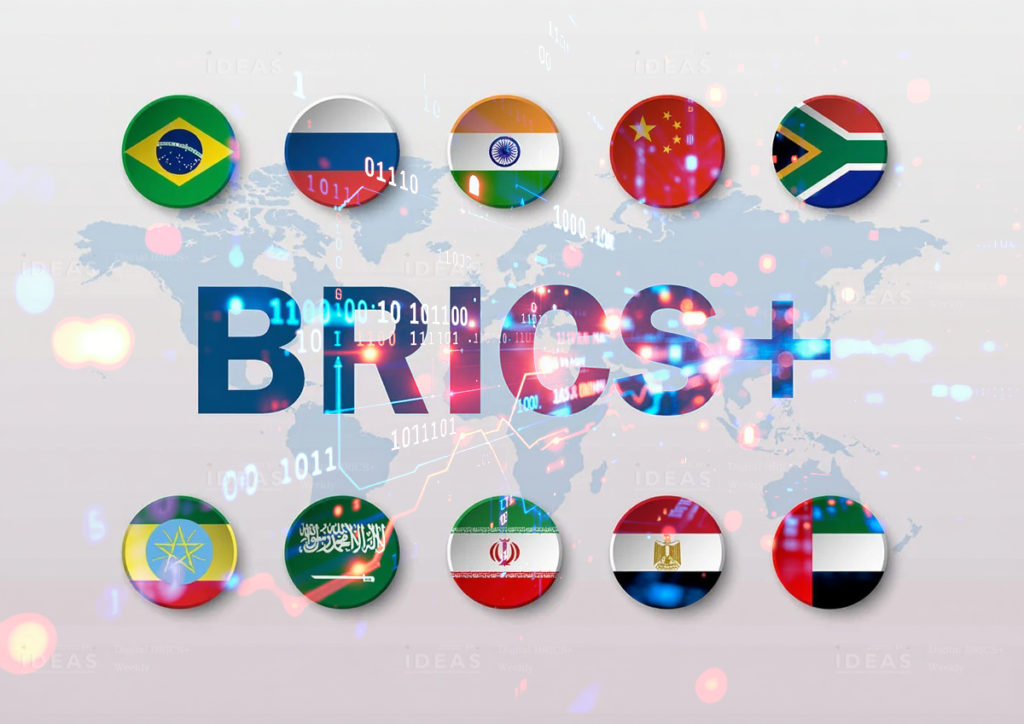
Other than the countries that became new full members on Jan. 1, 2024, more than 30 nations have also formally applied to join BRICS, while many other developing countries are seeking deeper cooperation with the group.
“There is a reason why these countries choose to join BRICS,” said Mekhri Aliev, a board director of the BRICS innovation base in Xiamen. “Because they see future, they see potentials and opportunities within the BRICS.”

 By WanyuLiao


No comment yet, add your voice below!