
The 16th BRICS Summit, to be held in Kazan, Russia from 22 to October 24, 2024, is the first meeting of leaders after the expansion of BRICS, drawing widespread attention of the international community.
Since the inception of BRICS mechanism, its members have adhered to the spirit of openness, and inclusiveness and the original aspiration of win-win cooperation, solidarity and self-improvement. BRICS has evolved into a positive, stable and favorable force in international affairs.
BRICS represents the collective rise of emerging markets and developing countries. The BRICS cooperation mechanism has entered a new era of “greater BRICS cooperation”. Its members will continue to work together on the road of modernization, make greater contributions to improving the global governance system, and provide “BRICS answers” to the changes unseen in a century.


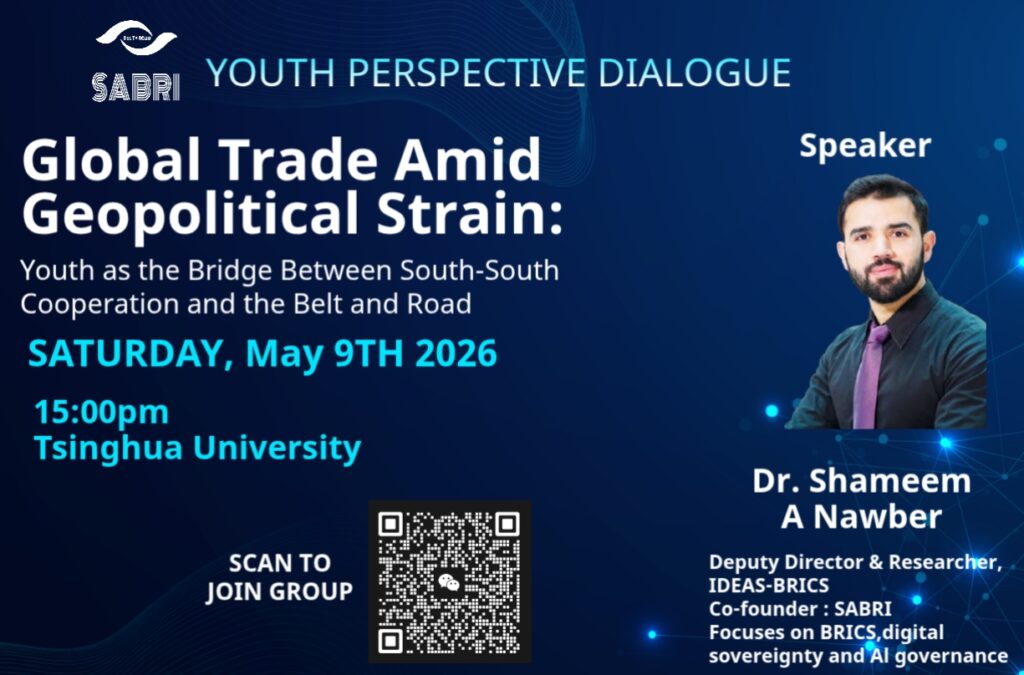
A Tsinghua Lecture on Global Trade, Multiplex Order, and the Road Ahead
The standard debate about world order tends to get stuck in the same rut—unipolar or multipolar, American dominance or its decline. But that framing is too blunt to capture what is actually happening. Amitav Acharya's concept of a "multiplex order" offers something more useful: a world where power is not simply held but performed—through the capacity to move goods, mobilize capital, and maintain connectivity across an increasingly fractured global system.
 By WanyuLiao
Building Digital Sovereignty, Connecting Asia-Pacific Innovation—IDEAS-BRICS at the APEC Economies’ Innovation Policy and International Cooperation Forum
At the APEC Innovation Policy Forum (May 11), IDEAS-BRICS presented the Digital Sovereignty Index (DSI) — mapping Asia-Pacific economies from "initial" to "independent" digital maturity. Bridging the hardware gap and building sovereign AI capabilities. #APEC #DigitalSovereignty #AI
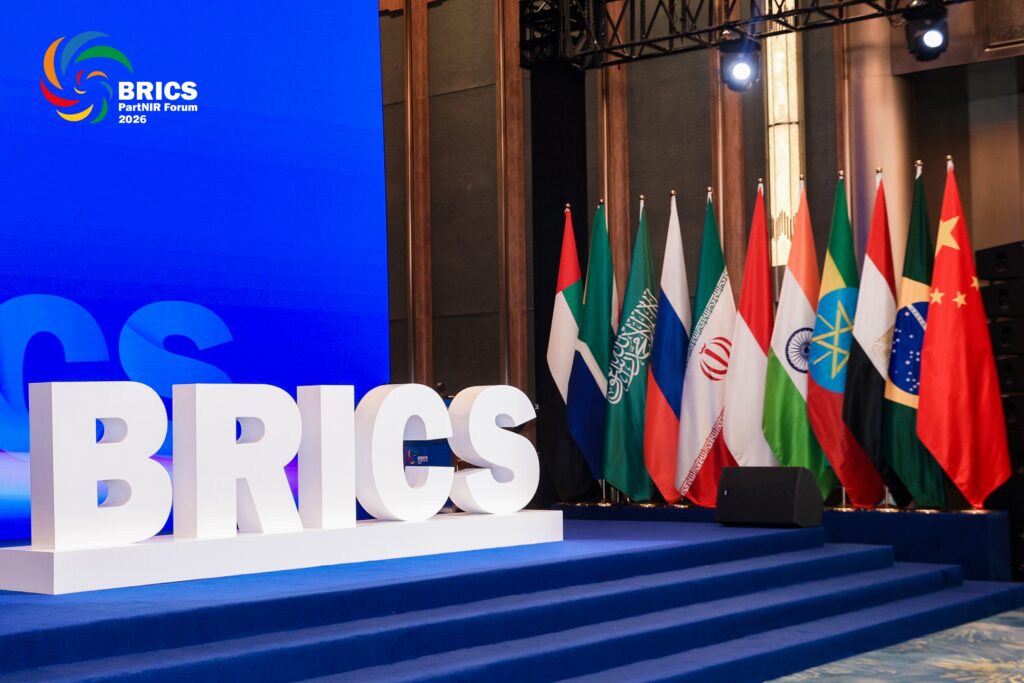
BRICS Digital Economy Cooperation Week 2026 — An IDEAS-BRICS Reading
An IDEAS-BRICS institutional commentary on the BRICS Partnership Forum on the New Industrial Revolution — Xiamen, 27–28 May 2026.


No comment yet, add your voice below!