
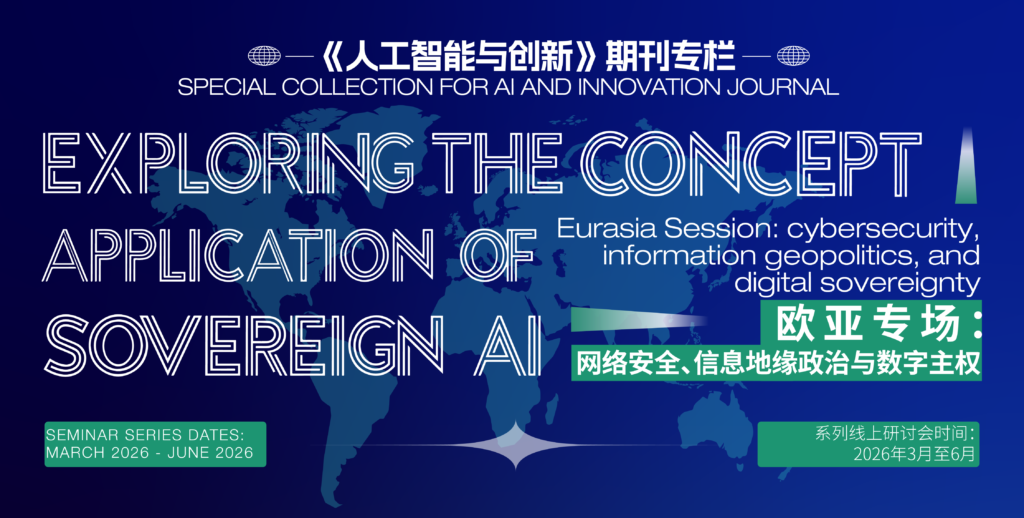
On April 21st, the Institute for Digital Economy and Artificial Systems (IDEAS-BRICS) and the Institute of International Communication & Global South Academic Forum (GSAF) of East China Normal University jointly hosted the second session of the “Sovereign AI and Digital Sovereignty” seminar series, focusing on the Eurasian region. The “Sovereign AI and Digital Sovereignty” theme collection under the journal AI & Innovation (AI²) is the target of this seminar series. The session continued its format of in-depth dialogue, breaking away from traditional lecture-style presentations to focus on core topics of cybersecurity, information geopolitics, and digital sovereignty in the Eurasian region.
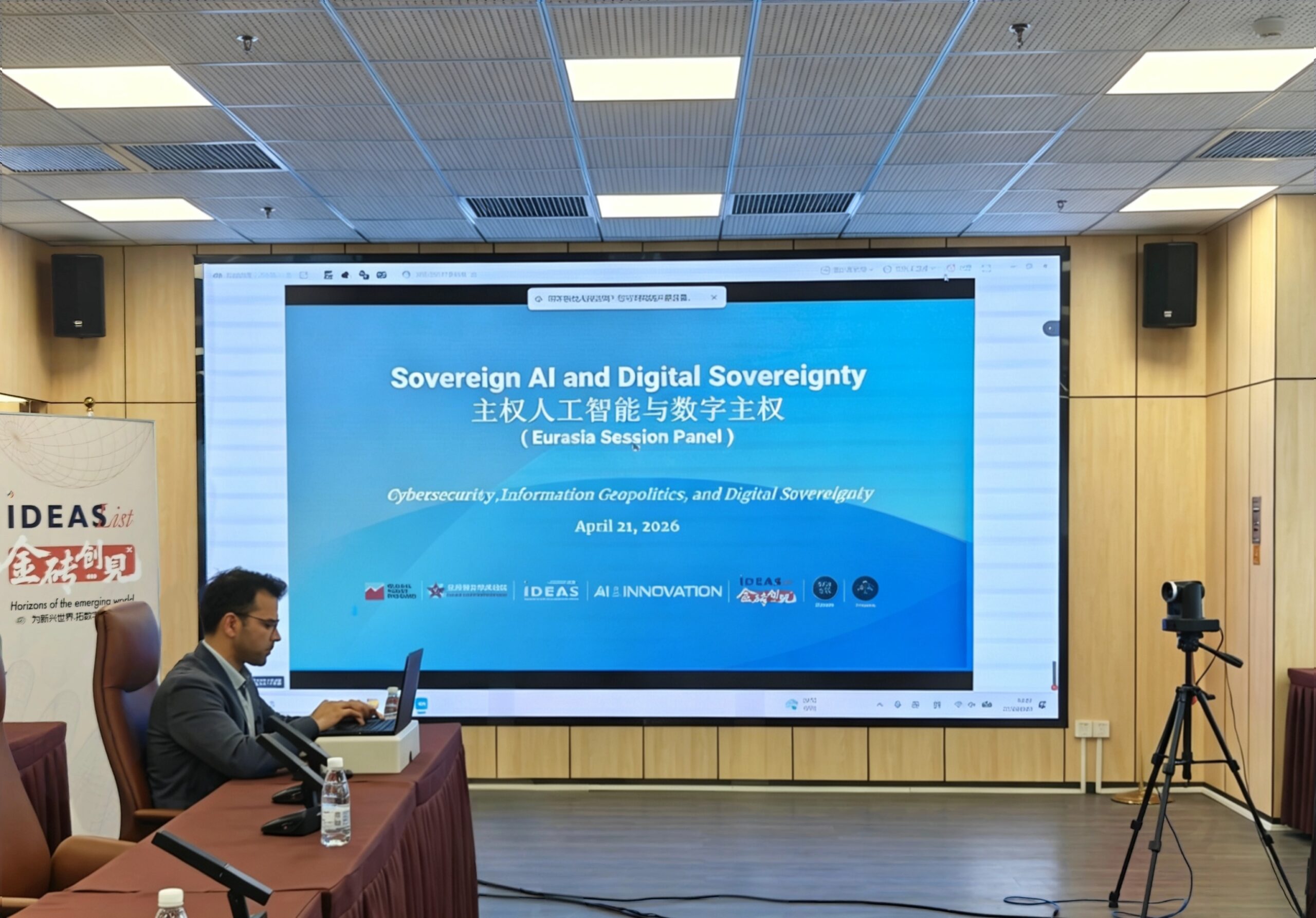
The seminar was moderated by Dr. Shameem A. Nawber, Deputy Director of IDEAS-BRICS and Associate Editor of AI². Invited experts included:
- Elena Zinovieva: Professor and Deputy Director at the Center for International Information Security and Scientific and Technological Politics, MGIMO University (Russia); Guest Editor, AI & Innovation (AI2)
- Lin Ying: Assistant Research Fellow, Institute of Russian, Eastern European, and Central Asian Studies, Chinese Academy of Social Sciences (China)
- Xiong Jie: Secretary‑General, Global South Academic Forum; Director, Global South Research Center, East China Normal University (China)
- Xiao Yu: Executive Secretary-General, IDEAS-BRICS; Executive Editor-in-Chief, AI & Innovation (AI2)
Opening
At the start of the seminar, moderator Dr. Shameem delivered opening remarks introducing the core focus and format of the session. He then elaborated on the four research directions of the theme collection “Sovereign AI and Digital Sovereignty” of AI2, emphasizing the unique value of this seminar series—scholars with a cutting-edge interdisciplinary dialogue platform before formal academic research takes shape.
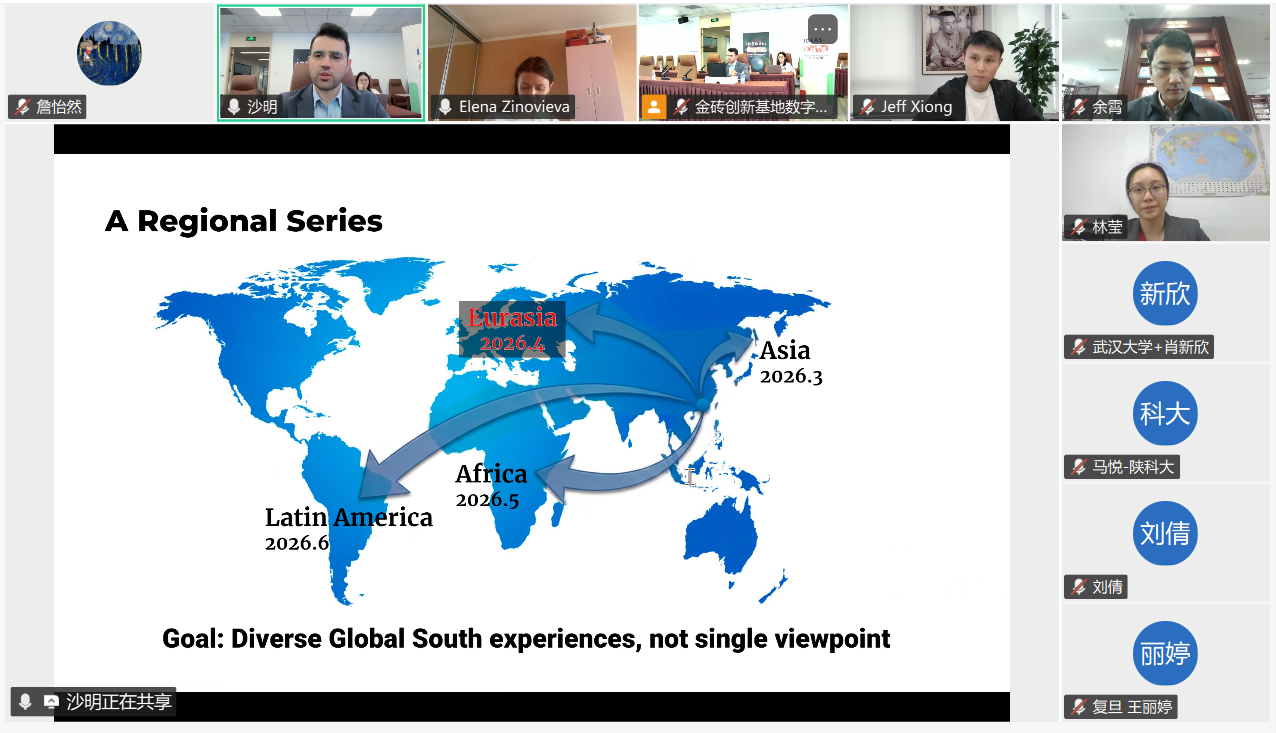
In his opening address, Xiao Yu first identified the central issue—as AI technology rapidly advances, the global imbalance in digital power is deepening, and countries lacking controllable autonomous AI face real risks. Building on this, Xiao Yu presented the rationale for convening this Eurasian session, emphasizing the significant practical importance of meaningful dialogues between China and Russia regarding information security and digital governance, which serve as a crucial reference for investigating avenues to digital sovereignty. He expressed optimism regarding the advancement of digital sovereignty in the Eurasian region, asserting that inter-regional cooperation and dialogue will be essential for rectifying the digital power disparity and establishing an autonomous and manageable digital ecosystem.
Four Segments
The seminar featured four segments progressing in a logical sequence.
- Segment A: To analyze the core connotations of “sovereign AI” and “digital sovereignty” from a Eurasian perspective
- Segment B: To interpret the main characteristics of Russia’s information security governance and Eurasian cybersecurity in 2025
- Segment C: To analyze the emerging dynamics of competition in cyberspace and information space across the Eurasian region with cases of Sino-Russian cooperation
- Segment D: To discuss the key risks and policy trajectories surrounding Eurasian digital sovereignty over the coming years
An interactive Q&A session between experts and the audience was followed.
Elena Zinovieva: Information sovereignty is the core battleground of geopolitical competition; Eurasian nations must build a shared digital security framework through institutional cooperation
Elena began by emphasizing that Russia was among the earliest countries to propose the concept of “digital sovereignty” at the UN level and that its understanding of information sovereignty extends beyond the technical dimension to encompass control over narrative and discourse. She identified two major transitions underway in the Eurasian region: first, a sharp rise in countries’ awareness of the importance of digital sovereignty; and second, the militarization and weaponization of AI, which is intensifying security risks—the combination of cognitive warfare and military AI makes the situation increasingly difficult to control.
Faced with Western technological hegemony and external pressure, Elena argued that the greatest common vulnerability of Eurasian nations is technological dependence. She recommended that countries use multilateral platforms such as the SCO and BRICS to advance scientific cooperation on the basis of sovereign equality, rather than replicating the US model of dependency. She also called for prioritizing the governance of emerging fields such as quantum technology and neurotechnology.

Lin Ying: Russia’s information security practices offer an important reference for Global South countries in countering Western sanctions and cognitive warfare
Lin Ying systematically outlined three distinctive features of Russia’s information security framework. First, Russia extends information control beyond data and systems to monitoring major public opinion dynamics—far exceeding the Western framework centered on data protection. Second, Russia characterizes the information space as an extension of national sovereign boundaries, echoing China’s concept of “cyberspace sovereignty” and jointly resisting Western interference under the guise of “internet freedom.” Third, since 2014, Russia has actively developed proactive information countermeasure capabilities.
On China-Russia cooperation, she cited concrete mechanisms under the SCO and BRICS frameworks, as well as joint investment cases by the Russian-Chinese Investment Fund in areas such as AI chips and knowledge graphs. Looking ahead, she identified quantum communications, firewall systems, digital economy transformation, and active information warfare response as four priority areas for Eurasian digital sovereignty building. She issued a particular warning: the risk of the United States using AI for military strikes could lead to strategic miscalculations and humanitarian crises and should become a primary research topic for academics.

Xiong Jie: Digital sovereignty building cannot stop at awareness—China and Russia should work together to create an alternative AI ecosystem for the Global South based on open-source technology
Xiong Jie used his team’s “Digital Sovereignty Index (DSI)” as a tool to quantitatively assess Russia’s current state of digital sovereignty, pointing out that its core weakness lies in heavy dependence on the West for underlying hardware and foundational software, though awareness of data protection and recognition of data economic value are rapidly improving.
On the China-Russia cooperation model, he noted that existing cooperation is constrained by a dual limitation of “commercial procurement” and “technical assistance.” Chinese companies participate only as suppliers, causing many Global South countries to encounter political, diplomatic, and cultural obstacles when seeking alternatives. He put forward a concrete proposal: China has strong fundamental R&D and digital infrastructure capabilities, while Russia possesses top-tier applied software development capabilities and a large pool of STEM talent. The two countries should complement each other’s strengths, focusing on deploying open-source models like DeepSeek across Eurasian countries to help them build genuinely autonomous sovereign AI infrastructure. He also called for future editions of the Digital Sovereignty Index to incorporate AI capability as an assessment dimension and to extend research coverage to Central Asia.
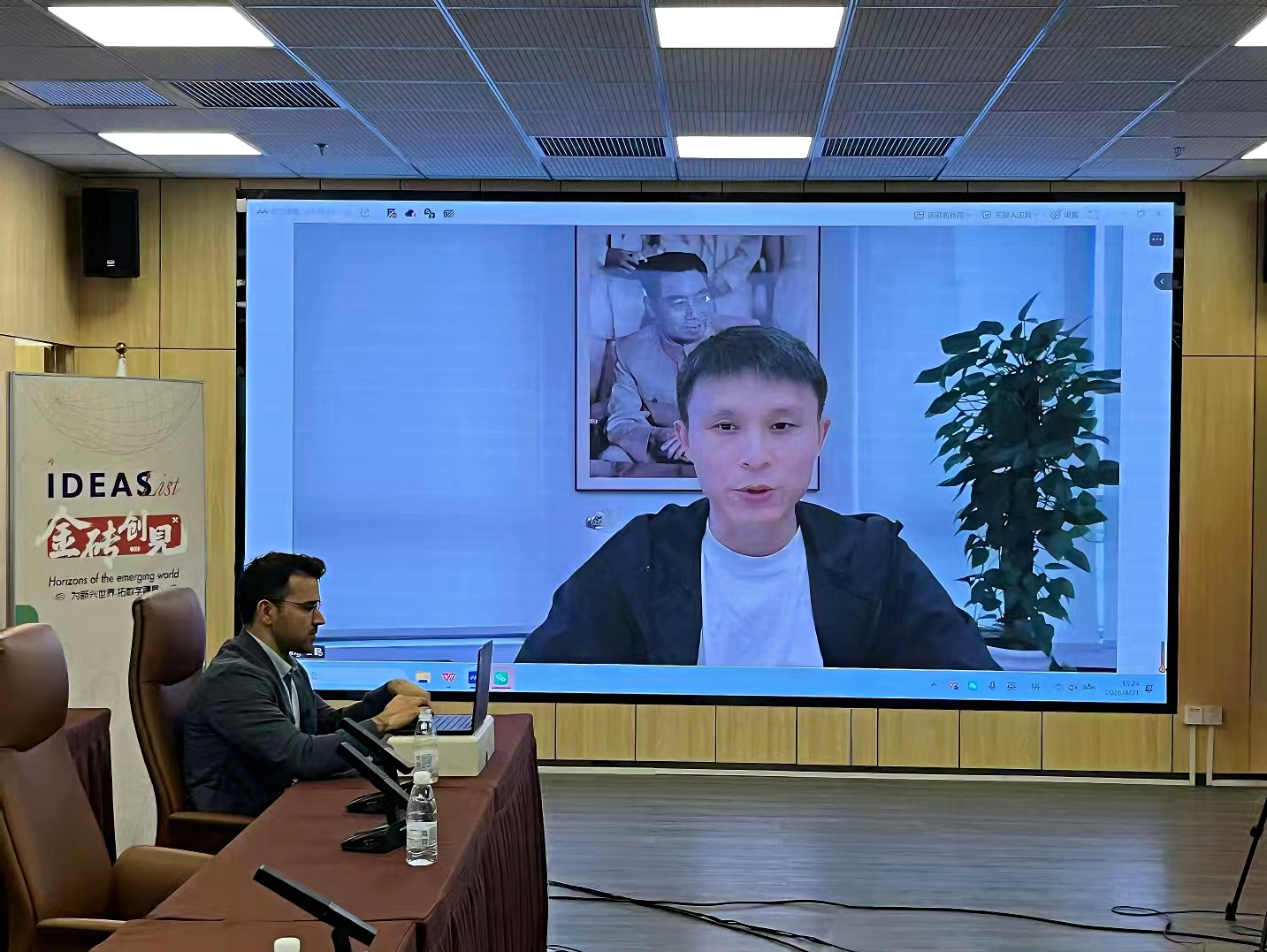
Q&A Session
Following the four segments, an interactive Q&A session was held, with Elena and Lin Ying each answering audience questions. In response to skepticism about whether China-Russia cybersecurity cooperation is merely superficial, Elena pointed out that cooperation between the two countries spans multiple levels—political declarations, economic and financial arrangements, security protocols, and academic-commercial collaboration—and is not limited to joint statements at multilateral forums. In response to a question about how to strengthen BRICS digital governance rules, Lin Ying candidly acknowledged that multilateral BRICS mechanisms have limited short-term effectiveness and suggested instead advancing cybersecurity cooperation through bilateral efforts such as China-Russia and China-India channels.
Closing
In his closing remarks, the moderator briefly reviewed the seminar, noting that the discussion had delved deeply into the practical dimensions of digital sovereignty in the Eurasian region, covering Russia’s domestic digital governance practices, the Eurasian cybersecurity landscape, China-Russia cooperation opportunities and vulnerabilities, and other core topics. He affirmed the specific policy recommendations and research questions raised by the speakers, including Elena’s suggestion to study Eurasian digital sovereignty issues through the lens of international relations theory—an inspiration for the AI²’s call for papers. The moderator also expressed hope that these topics would be further developed in subsequent sessions of the seminar series.
Conclusion
This Eurasian session provided profound insights into the practical logic of digital sovereignty under geopolitical pressure. As the participants collectively revealed, building digital sovereignty is no overnight endeavor—it requires full-chain autonomous capability spanning from narrative discourse to technical infrastructure, as well as a strategic balance between bilateral cooperation and multilateral mechanisms. For Eurasian nations, the most urgent task is not to align with either China or the United States but to use institutional platforms such as the SCO and BRICS, leveraging open-source technology and South-South cooperation, to genuinely embed sovereign consciousness into the foundational logic of digital governance. Only in this way can these countries, in an era of accelerating AI militarization and algorithmic hegemony, safeguard their strategic depth in the information space and secure a truly proactive position in the reshaping of a multipolar digital order.
This topic is precisely the core direction that the theme collection “Sovereign AI and Digital Sovereignty” of the journal AI & Innovation has been continuously focusing on. This theme collection calls for high-quality papers from global scholars, policy researchers, and industry practitioners, encouraging interdisciplinary perspectives and empirical research. For details, please click the following link to visit the journal homepage: https://onlinelibrary.wiley.com/journal/30673941.
The entire seminar was recorded, and the complete video will be edited and released on our media platform. Interested readers are welcome to watch it: for the Chinese platform, please follow “数智金砖,” the same name on all platforms; for the English platform, please follow Multipole.

 By WanyuLiao
No comment yet, add your voice below!