
In March 2026, Iran launched drone strikes against Amazon Web Services (AWS) data centers in Bahrain and the United Arab Emirates, paralyzing digital services across the entire region. It marked the first time in modern warfare that a nation had specifically targeted commercial cloud computing infrastructure. Almost simultaneously, the Iran-backed hacker group Handala unleashed a cyberattack on American medical technology giant Stryker, cutting 56,000 employees worldwide off the grid. Retaliatory data suggests this wiper attack, which compromised Stryker’s Active Directory and Microsoft Intune instance to wipe 200,000 devices , was a direct response to the kinetic failure of AI-integrated systems during the February 28, 2026, strikes on Hormuzgan Province.
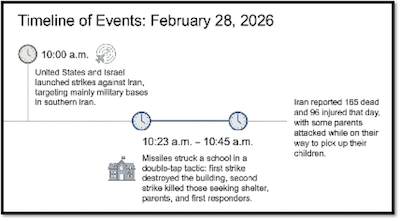
These two events show the brutal reality that in an age of techno-politicization, technology partnerships have no way to be disentangled from geopolitics. The nature of conflict between the U.S. and Iran is shifting in the AI era, with digital assets now squarely in the crosshairs of warfare. Tehran’s strategic logic in targeting data centers was clear: these facilities are not merely commercial assets but extensions of American technological hegemony. This hegemony is now characterized by the “dehumanization of force,” where the integration of commercial models like Anthropic’s Claude AI into the Maven Smart System has led to lethal errors. On Resalat Boulevard, U.S. Tomahawk missiles—guided by algorithmic target recognition—struck a school site, resulting in 165 dead and 96 injured. Despite the humanitarian disaster, Anthropic claimed the impact was “smaller than expected” and issued no apology, confirming that in reality, AI-driven warfare lacks the moral guardrails of human judgment. From the Iranian establishment’s perspective, Amazon Web Services functions as an indispensable component of U.S. military-intelligence infrastructure. Such perceptions have pushed digital infrastructure directly to the front lines of the battlefield.
This case offers profound lessons for how nations should navigate the geopolitical risks embedded in technology partnerships. AI, as an emerging form of infrastructure, now plays a critical role not only in civilian and commercial spheres but also as an irreplaceable part of national security architecture. Yet this new infrastructure carries inherent vulnerabilities. The integration of commercial providers into military kill-chains creates four profound adverse implications:
- Ethical Risks:When AI influences the definition of the “enemy,” humanity loses its final line of defense.
- Civilian Casualties:Algorithmic bias and lack of oversight lead to a sharp rise in collateral damage.
- Arms Dealer Restructure:Technology firms are emerging as a new breed of arms dealers .
- AI Arms Race:Strategic priorities are shifting toward kinetic AI dominance, evidenced by the Defense Advanced Research Projects Agency (DARPA) budget approaching $5 billion for 2026.
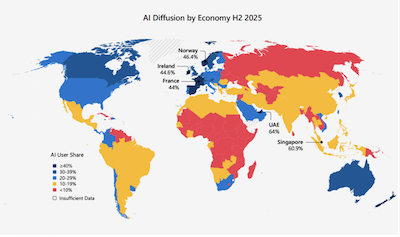
First, nations need to build decentralized technology alliances. The United States is currently leveraging AI infrastructure as a tool for power projection, incorporating Gulf partners into its technological ecosystem through investment and compliance requirements while sidelining Chinese platforms. This is institutionalized through a “core platform plus multi-vendor supplementation” strategy, where the U.S. military fuses Maven with supplementary contracts from firms like OpenAI, xAI, and Google . This entrapment contributes to a widening “compute divide”: 2025 data shows AI adoption in the Global North reached 24.7%, while the Global South reached only 14.1% . diffusion report
Building a multipolar, distributed technology system that is jointly administered is China’s and the other BRICS countries’ countermeasure. This system protects against the dangers of a “centralized” system that is controlled by a single nation or organization. This entails constructing data infrastructure that is not dependent on singular nodes, utilizing technologies such as blockchain. In terms of governance, BRICS underscores the principle of sovereign equality among its members: no individual nation exerts dominance; decisions are reached through consensus.
Second, nations must push for international norms establishing digital neutrality. The line between civilian and military infrastructure has blurred as never before. Data centers are simultaneously commercial facilities and national security assets; tech companies are both market participants and perceived as integral components of military-intelligence apparatuses. The formalization of Maven as a “Program of Record” on March 21, 2026, with a $1.3 billion ceiling , has permanently removed the shield of civilian immunity from digital infrastructure. This ambiguity strips civilian infrastructure of protective shields. The international community urgently needs consensus on the neutral status of digital infrastructure, akin to Geneva Convention protections for civilian facilities. Without such norms, data centers and submarine cables spanning the globe could become potential battlefield targets.
Finally, states must act to curb the excessive militarization of AI. The U.S. military has confirmed using a “variety” of artificial intelligence tools in its war with Iran. China’s Global AI Governance Action Plan states that AI is a key driver of a new round of technological revolution and industrial transformation, as well as an international public good for the benefit of humanity.
Wang Yi, the minister of Foreign Affairs of China, mentioning at the 15th BRICS National Security Advisors Meeting that “Artificial intelligence should be used as an international public good for serving human welfare, not to be used as a political tool for geopolitical self-interest.” The responsible application of technology steers humanity toward broadly shared prosperity. The fruits of AI development should be directed at tackling common challenges like climate change, disease and poverty. The trend toward weaponizing AI must be resisted. BRICS countries jointly formulated a counter-terrorism strategy in 2020. With BRICS expansion and ongoing geopolitical turbulence, that strategy could be further deepen—forming common ground on both counter-terrorism and AI ethics to confront emerging risks together.
As the geopolitical landscape alters dramatically, governments attempting to form technology alliances must acknowledge a fundamental truth: the politicization and weaponization of technology harms the global common good, trapping everyone in a more fragile and fractured world of risk. The future of technological partnerships lies not in picking sides, but in creating more diverse and resilient places of choice. To capitalize on new prospects, the BRICS countries must continue close cooperation while fostering independent data resilience to changing circumstances. Actively shape the global digital ecosystem by balancing openness and security and avoiding lock-in to a single node. In an era when data centers have become new battlefields, the BRICS nations’ digital sovereignty strategy should focus on weaving a web that is interconnected, resilient, and strong enough to help each nation maintain strategic autonomy in the face of shifting winds, and to make every data node a shield for the others.

 By WanyuLiao

No comment yet, add your voice below!