
In an era defined by converging crises—from unpredictable climate shocks to fractured global supply chains—food security has become a central issue on the geopolitical chessboard. For the Global South, the challenge is particularly acute. Feeding a growing population on limited resources is a monumental task made harder by extreme weather events that can wipe out harvests and livelihoods overnight. In this high-stakes environment, a new generation of agricultural technology, powered by artificial intelligence (AI), is moving from the lab to the land, offering not just a competitive edge, but a crucial lifeline.
This is not a story about futuristic concepts; it’s about practical, field-tested tools that are already reshaping the agricultural landscape. By integrating AI with robotics, satellite imagery, and the Internet of Things (IoT), “AgriTech” is creating a smarter, more resilient model for food production. This article examines how two BRICS+ nations are pioneering this transformation on different fronts: Brazil, an agricultural superpower, is using AI to optimize its massive industrial-scale operations, while Ethiopia is deploying AI to build climate resilience and empower the smallholder farmers who form the backbone of its economy. Their stories provide a powerful roadmap for the future of food security.
The Digital Toolkit for Modern Farming
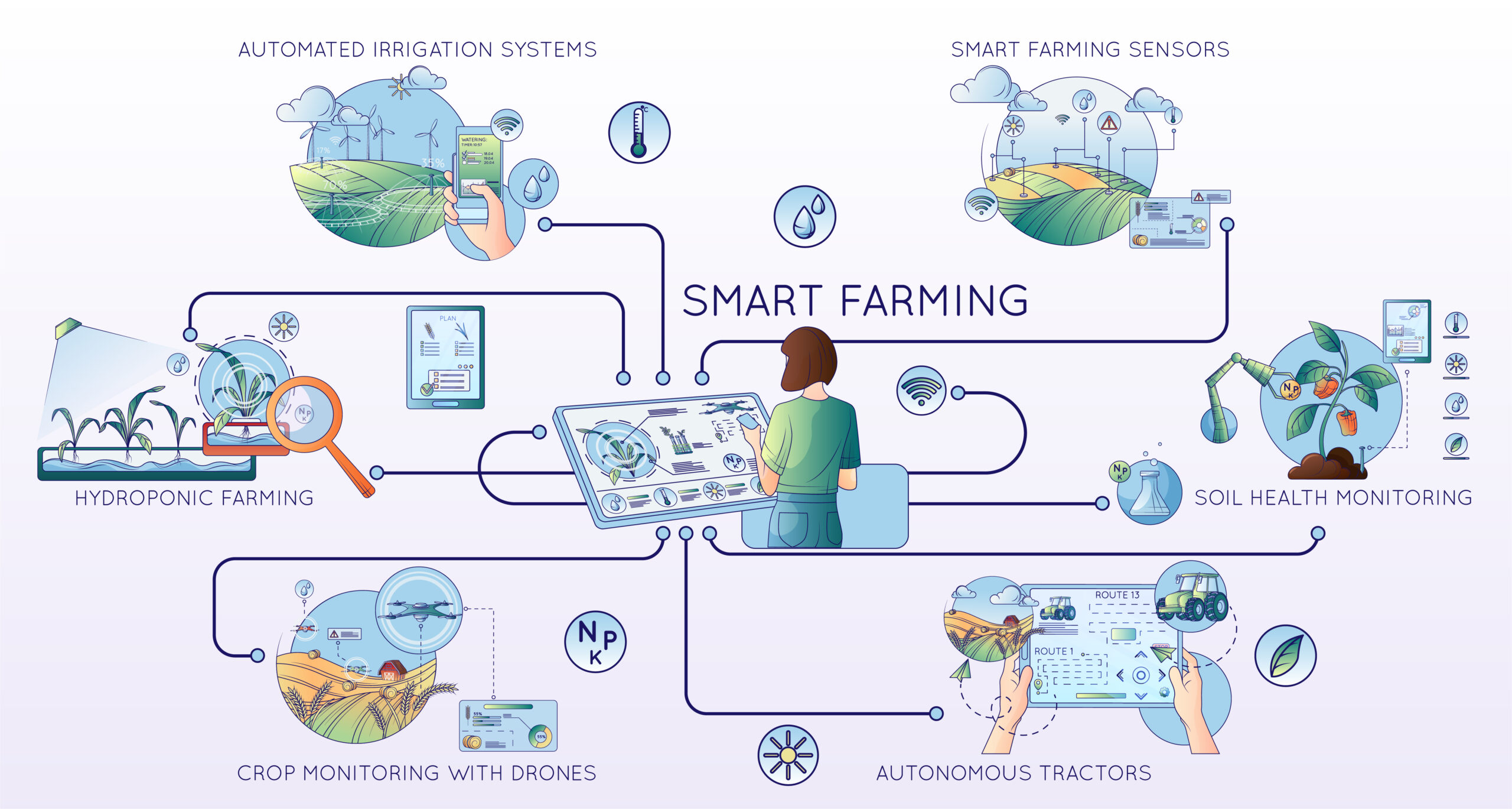
The AI revolution in agriculture is driven by a suite of core technologies that transform data into decisive action. These tools are making the entire food production chain more efficient and sustainable.
- Computer Vision and Drone Analytics: AI-powered drones and satellites now provide constant, precise surveillance of farmlands. Computer vision algorithms analyze this imagery to detect early signs of pest infestations, nutrient deficiencies, and water stress with a level of detail impossible for the human eye. This enables targeted interventions, like the precision spraying of pesticides, which has been shown to reduce chemical use by as much as 90%.
- Predictive Analytics: By analyzing massive datasets—including historical weather patterns, soil moisture levels from IoT sensors, and satellite data—machine learning models can now forecast crop yields with remarkable accuracy. These predictions allow farmers and governments to mitigate the risks of climate volatility by making smarter decisions about planting schedules and resource allocation.
- IoT and Smart Sensors: A network of sensors in the field can stream real-time data on soil moisture and nutrient levels. AI systems process this information to automate tasks like irrigation, ensuring that water is used only when and where it is needed—a critical advantage in water-scarce regions.

Case Study: Brazil – AI for Industrial Scale and Efficiency
As one of the world’s agricultural powerhouses, Brazil has become a key testing ground for deploying AI at an industrial scale.The country’s AI in agriculture market is projected to grow at a compound annual growth rate of nearly 20% through 2033, driven by the widespread adoption of precision farming. This push is backed by a robust national strategy, the Brazilian Artificial Intelligence Plan (PBIA), which targets agriculture as a priority sector for technological modernization.
The on-the-ground results are already impressive:
- Autonomous Robotics: In São Paulo, the AgriTech firm Solinftec has launched its “Solix” autonomous robot. Powered by solar energy, Solix uses AI and computer vision to patrol fields and apply herbicides with surgical precision, reducing chemical use by up to 90% in key crops like soybeans and sugarcane.
- Quantifiable Yield Increases: The fusion of AI-powered monitoring, precision drones, and advanced biotechnology is delivering significant gains. For 2025, the estimated yield for soybeans is projected to increase by 25%, and for corn by over 20%, directly attributable to these technologies.
Case Study: Ethiopia – AI for Smallholder Resilience
While Brazil showcases AI’s power at scale, Ethiopia demonstrates its potential to empower the most vulnerable. The country’s agricultural sector is dominated by smallholder farmers who are highly exposed to climate shocks. Recognizing this, the government’s National AI Strategy and Digital Agriculture Roadmap prioritize the use of technology to build resilience from the ground up.
This strategy is being realized through innovative international partnerships:
- AI-Powered Advisory Services: The Food and Agriculture Organization (FAO) and the non-profit Digital Green are piloting an AI-powered advisory service that delivers localized advice to farmers via mobile apps. The economic impact is transformative: where traditional advisory services cost around $30 per farmer, the AI model has the potential to lower the cost to just $0.30 per farmer—a 100-fold reduction that makes critical knowledge accessible at an unprecedented scale.
- Sino-Ethiopian Agricultural Pact: Ethiopia has signed a landmark agreement with China to embed AI and advanced research into its farming systems. This partnership focuses on co-innovation, including the development of specialized labs and the training of Ethiopian scientists in AI applications, ensuring long-term capacity building.
Conclusion: The Geopolitics of the Digital Harvest
The cases of Brazil and Ethiopia reveal two sides of the same coin: AI is becoming an indispensable tool for ensuring food security in an increasingly volatile world. Whether by maximizing the efficiency of industrial farms or by radically lowering the cost of knowledge for smallholders, these technologies offer a pathway to a more productive and sustainable agricultural future.
However, significant challenges remain. The success of this digital harvest depends on closing the rural infrastructure gap, building human capital through targeted training, and establishing robust data governance frameworks. These are not just technical problems; they are strategic imperatives. The nations that successfully integrate these tools will not only secure their food supplies but also gain a significant measure of geopolitical stability. The path forward requires a holistic approach where technological innovation is matched by strategic policy and international cooperation. If that balance is struck, AI is poised to deliver a more resilient and equitable harvest for the Global South.

 By WanyuLiao



No comment yet, add your voice below!