Skip to content

News and Blogs

Welcome to our News and Blogs page! Stay updated with the latest insights, stories, and breakthroughs from the Institute for Digital Economy & Artificial Systems (IDEAS). Here, we share our journey in digital transformation, innovative research, and collaborative projects that are shaping the future.

Join the Conversation

Stay connected and be part of our journey as we pioneer new frontiers in digital innovation and sustainability.

Cutting-Edge Research

Event Highlights

Expert Opinions

Educational Articles

Latest Blogs & News

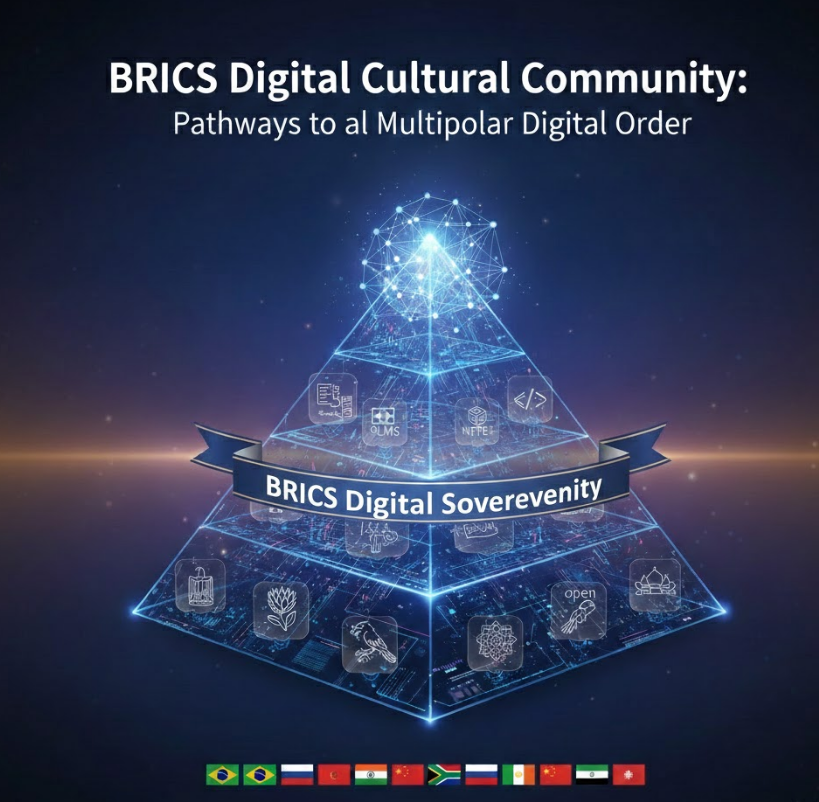
How can BRICS build a Digital Cultural Community?

Margareth Menezes, the Brazilian Minister of Culture, pointed out, “BRICS is not just an economic group, but a dialogue platform that values cultural diversity and sees it as a driving force for fairer and more balanced development.”

Call for Papers

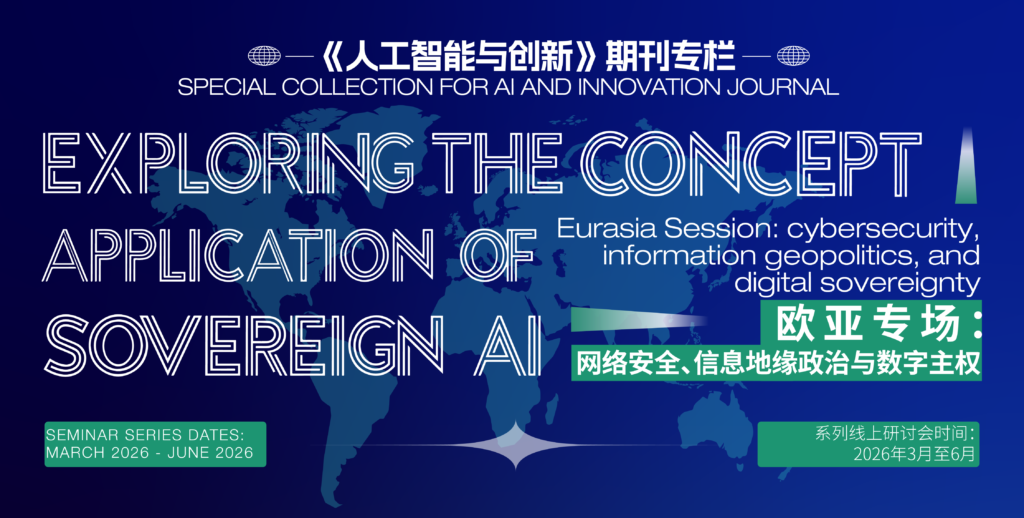
This call for papers invites submissions for a Theme Collection on Sovereign AI and Digital Sovereignty, exploring challenges in achieving technological autonomy. Topics include open-source AI, digital trade agreements, and geopolitical shifts. Contributions from scholars across Africa, Latin America, South Asia, Southeast Asia, and Russia are welcome.

How Can BRICS+ Design Trusted Data Corridors Without Weakening Sovereignty?

The need for BRICS+ to design “trusted data corridors” stems from a fundamental shift in how data is viewed in the 21st century: not just as a flow of information, but as a strategic asset, a source of sovereignty, and a foundation for economic and political power. In this context, cross‑border data flows can no longer be treated as a purely technical matter; they reshape who controls digital infrastructure, who sets standards, and who captures value from analytics and artificial intelligence.

The Industrial Paradox: Why the Factories That Need Intelligence the Most Have the Hardest Time Adopting...

Manufacturing is arguably the sector with the greatest potential for AI empowerment. The promise of predictive maintenance, quality control, and process optimization is theoretically immense. However, a paradox defines the current industrial landscape: while factories generate more data than arguably any other sector, they have progressed far slower in AI adoption than finance, the Internet, or consumer goods.

Call for Papers

This theme collection focuses on the role of AI in enhancing economic resilience, security, and sustainability amid globalization challenges. It explores AI’s impact on economic governance, theories, models, and ethical issues, addressing the integration of AI in crisis management, labor markets, and global economic systems.

Brazil's 'Governance-First' AI Gambit: A New Model and its Challenge

While the world’s superpowers race for dominance in compute power and large-scale models, Brazil is playing a different game. As a key member of the BRICS, Latin America’s largest economy is pioneering a high-stakes national experiment: a “Governance-First” model for artificial intelligence. Instead of building its strategy on a foundation of silicon, Brazil is building it on law, ethics, and social equity. This is a radical bet that seeks to create a new “Southern” template for AI, one that prioritizes human rights over the raw pursuit of innovation. This article analyzes the three core tensions at the heart of Brazil’s gambit: a profound clash between its legal ambitions and its infrastructural reality; a deep gap between its social equity goals and its on-the-ground market failures; and the resulting strategic imperative to find new multilateral alliances to ensure its model survives.

AI & Innovation Journal Connects with Global Experts at iKM2025 Conference

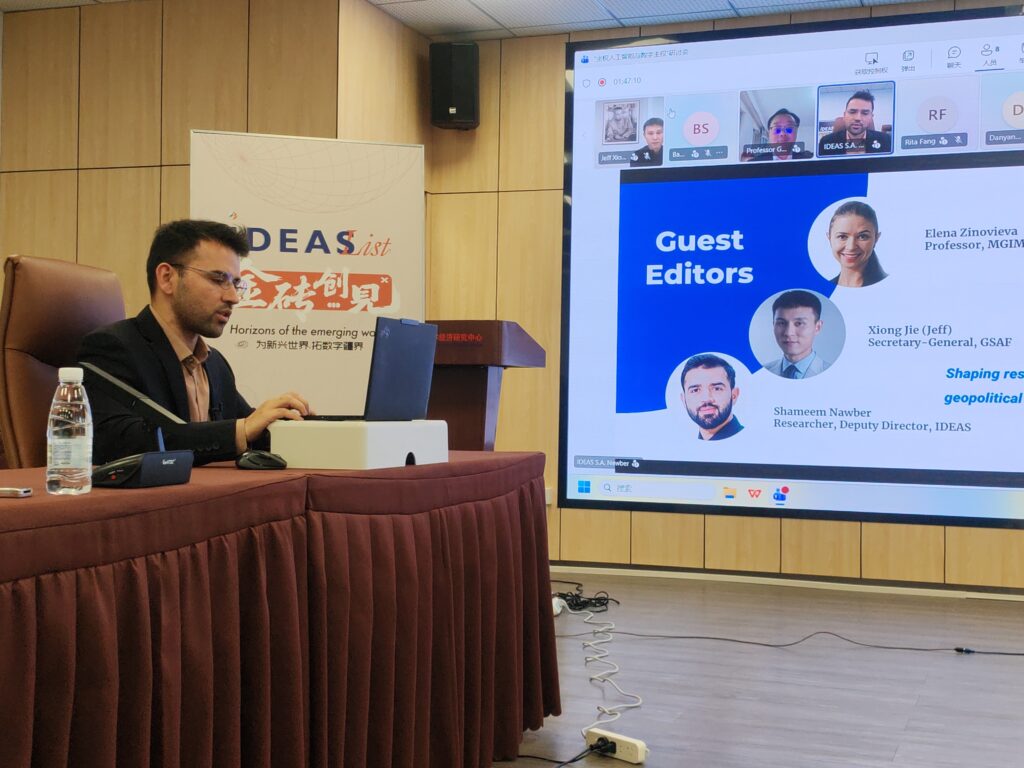
SHENZHEN, November 1, 2025 – The Institute for Digital Economy & Artificial Systems (IDEAS) took part in the 2025 International Conference on Innovation and Knowledge Management (iKM2025), engaging with global thought leaders to contribute to the dialogue on technology and innovation. Central to this engagement was AI & Innovation (AI²), the flagship international journal operated by IDEAS, which was featured as an official supporting academic journal for the conference.

China's Medical AI: A New Engine for Digital Health

Amid global healthcare challenges like aging populations and resource shortages, Artificial Intelligence (AI) is emerging as a critical force for change. China is strategically integrating medical AI into its national public health and digital economy frameworks, moving beyond solving isolated hospital inefficiencies. Supported by robust policy, vast data, and a dynamic industrial ecosystem, this approach is creating a new paradigm for digital health. It aims to provide a cooperative model for BRICS nations and the Global South, fostering shared innovation and promoting global health equity.

How is China's Semiconductor Strategy Reshaping Global Tech Cooperation?

In the contemporary global economy, semiconductors function as a foundational technology, essential for advancements in nearly every digital domain, from artificial intelligence and cloud computing to advanced telecommunications. For any nation with aspirations of technological leadership, a secure and resilient supply of these critical components is not just an economic advantage—it is a matter of strategic necessity. In this context, China has embarked on a patient, long-term initiative to cultivate a comprehensive and secure domestic semiconductor industry. This is not a strategy of isolation, but a proactive measure to enhance industrial security and ensure the stability of its vast digital economy.

The Smart Harvest: AI’s Role in Securing Food for the Global South

Global food insecurity demands innovative solutions, and artificial intelligence (AI) is at the forefront of transforming agriculture to meet this challenge. Through technologies like computer vision, predictive analytics, and IoT sensors, AgriTech initiatives in nations such as Brazil and Ethiopia are building a more productive, resilient, and sustainable food future.

The Rio Declaration: Architecting a Data Economy for the Global South

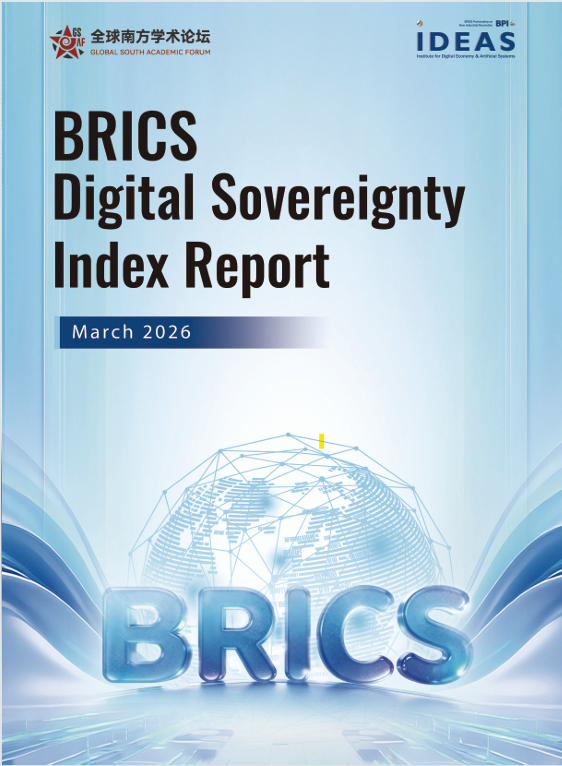
For years, the world has been caught between two flawed data governance models. Now, a third path is emerging. The BRICS bloc’s new Data Economy Governance Understanding offers a pragmatic framework built on Interoperability, Portability, and Standardization, designed to finally reconcile national data sovereignty with the demands of the global digital economy.

Shared Code, Shared Progress: The China Open Source Initiative

Building a digital community with a shared future. China’s commitment to open source empowers global developers, accelerates innovation, and creates new opportunities for technological progress and mutual prosperity.

How can BRICS build a Digital Cultural Community?

Margareth Menezes, the Brazilian Minister of Culture, pointed out, "BRICS is not just an economic group, but a dialogue platform that values cultural diversity and sees it as a driving force for fairer and more balanced development."
Read More

Call for Papers

This call for papers invites submissions for a Theme Collection on Sovereign AI and Digital Sovereignty, exploring challenges in achieving technological autonomy. Topics include open-source AI, digital trade agreements, and geopolitical shifts. Contributions from scholars across Africa, Latin America, South Asia, Southeast Asia, and Russia are welcome.
Read More

How Can BRICS+ Design Trusted Data Corridors Without Weakening Sovereignty?

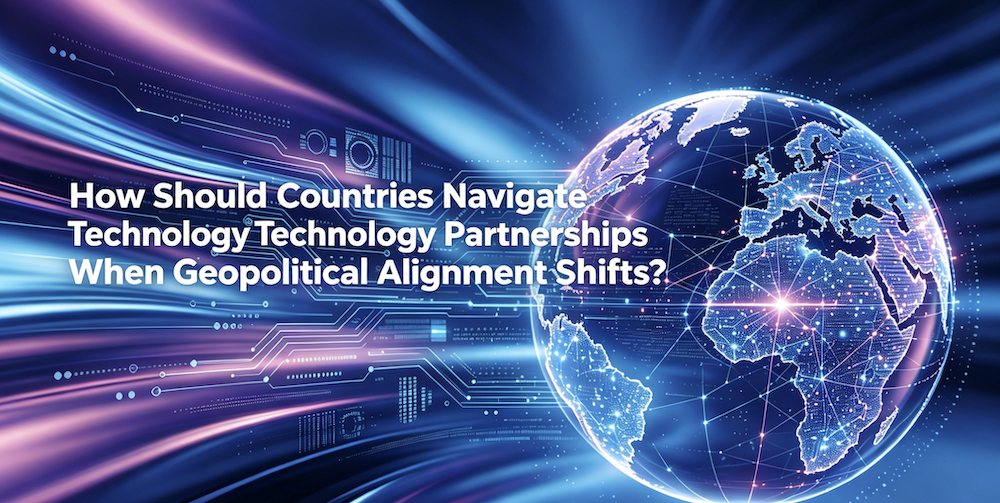
The need for BRICS+ to design “trusted data corridors” stems from a fundamental shift in how data is viewed in the 21st century: not just as a flow of information, but as a strategic asset, a source of sovereignty, and a foundation for economic and political power. In this context, cross‑border data flows can no longer be treated as a purely technical matter; they reshape who controls digital infrastructure, who sets standards, and who captures value from analytics and artificial intelligence.
Read More

The Industrial Paradox: Why the Factories That Need Intelligence the Most Have the Hardest Time Adopting AI?

Manufacturing is arguably the sector with the greatest potential for AI empowerment. The promise of predictive maintenance, quality control, and process optimization is theoretically immense. However, a paradox defines the current industrial landscape: while factories generate more data than arguably any other sector, they have progressed far slower in AI adoption than finance, the Internet, or consumer goods.
Read More

Call for Papers

This theme collection focuses on the role of AI in enhancing economic resilience, security, and sustainability amid globalization challenges. It explores AI’s impact on economic governance, theories, models, and ethical issues, addressing the integration of AI in crisis management, labor markets, and global economic systems.
Read More

Brazil’s ‘Governance-First’ AI Gambit: A New Model and its Challenge

While the world's superpowers race for dominance in compute power and large-scale models, Brazil is playing a different game. As a key member of the BRICS, Latin America's largest economy is pioneering a high-stakes national experiment: a "Governance-First" model for artificial intelligence. Instead of building its strategy on a foundation of silicon, Brazil is building it on law, ethics, and social equity. This is a radical bet that seeks to create a new "Southern" template for AI, one that prioritizes human rights over the raw pursuit of innovation. This article analyzes the three core tensions at the heart of Brazil's gambit: a profound clash between its legal ambitions and its infrastructural reality; a deep gap between its social equity goals and its on-the-ground market failures; and the resulting strategic imperative to find new multilateral alliances to ensure its model survives.
Read More

AI & Innovation Journal Connects with Global Experts at iKM2025 Conference

SHENZHEN, November 1, 2025 – The Institute for Digital Economy & Artificial Systems (IDEAS) took part in the 2025 International Conference on Innovation and Knowledge Management (iKM2025), engaging with global thought leaders to contribute to the dialogue on technology and innovation. Central to this engagement was AI & Innovation (AI²), the flagship international journal operated by IDEAS, which was featured as an official supporting academic journal for the conference.
Read More

China’s Medical AI: A New Engine for Digital Health

Amid global healthcare challenges like aging populations and resource shortages, Artificial Intelligence (AI) is emerging as a critical force for change. China is strategically integrating medical AI into its national public health and digital economy frameworks, moving beyond solving isolated hospital inefficiencies. Supported by robust policy, vast data, and a dynamic industrial ecosystem, this approach is creating a new paradigm for digital health. It aims to provide a cooperative model for BRICS nations and the Global South, fostering shared innovation and promoting global health equity.
Read More

Hear What Our Readers Have to Say!

Discover what our readers are saying about the Institute for Digital Economy & Artificial Systems (IDEAS) and our cutting-edge content. From insightful articles to groundbreaking research, here’s how our community is engaging with our work.

Sarah Johnson

"The insights provided by IDEAS have been instrumental in shaping our digital transformation strategy. The in-depth analysis and expert opinions are unmatched."

John Anderson

"As a researcher, I find the resources and case studies shared by IDEAS invaluable. Their commitment to academic excellence is evident in every publication."

Emily Roberts

"IDEAS' coverage of emerging digital platforms and AI innovations has opened new opportunities for my startup. Their content is a goldmine for anyone in the tech industry."

Emily Roberts

"The collaborative efforts and industry partnerships highlighted by IDEAS offer a clear vision for the future of digital economy and AI. Their work is truly pioneering."

Sarah Johnson

"The insights provided by IDEAS have been instrumental in shaping our digital transformation strategy. The in-depth analysis and expert opinions are unmatched."

John Anderson

"As a researcher, I find the resources and case studies shared by IDEAS invaluable. Their commitment to academic excellence is evident in every publication."

Emily Roberts

"IDEAS' coverage of emerging digital platforms and AI innovations has opened new opportunities for my startup. Their content is a goldmine for anyone in the tech industry."

Emily Roberts

"The collaborative efforts and industry partnerships highlighted by IDEAS offer a clear vision for the future of digital economy and AI. Their work is truly pioneering."